Friday, February 13, 2009

Ong's 9 points

Some thoughts on Ong's 9 points: 9 ways in which the Oral culture is distinct from the literal

1) Additive not subordinate
thermostat
Literature changed the style of storytelling from additive to subordinate. In oral cultures all the details of the story had equal importance. When the "ands" were removed in translation, some parts and details were implicitly more important than others. Oral cultures do not like to subordinate.

2) Aggregative rather than analytic - chalkboard
Instead of simple integers like "soldier", we are given epithets that pay homage to his nature. Basic "soldier" becomes "brave and valiant soldier". As in this example, the epithets can sometimes being repeating the same idea twice. But thats better than leaving out the fact that he was brave all together, drawing the line at simply "soldier".

3) Redundant or copius - Quiet Desk
Because in oral cultures a phrase dissapears as soon as it is uttered, it is important to repeat details that were already said to keep the listener and the speaker on track in the course of the story. In a literal scenario this would not be necessary: you just turn back a few pages if you feel you missed some important detail. In an oral epic this is not so. It requires constant repetition.

4)Conservative or Traditionalist - Screen
Since oral storytellers are constantly repeating what they've been saying for ages, they tend to hold onto the ideas of the past and maintain a conservative sort of mindset.

5)Close to the human lifeworld - Overhead projector
Without manuals or lists to rely on as a memory aid, oral cultures must create elaborate schemes for recalling lines of lineage and names of persons, places and things.

6)Agonistically Toned - Brown Desk
This is what we have called "flyting" in class. Writing "seperates the knower from the known" (Ong 44). This is still considered an art form today, "Stylized verbal tongue lashings" (Ong 44).

7) Empathetic and Participatory -
I think we have all experienced those moments when you get to the end of an assigned reading having no idea what you just read. Your mind wandered. When someone is talking to you, telling you a story, we feel more obliged to listen and have a response (although not always). Because oral cultures are more engaged in the stories told, there is a deeper sharing and understanding of the teller's and listener's emotions.

8)Homeostatic - Snowman
The snowman can adjust his body to never melt. Memories that no longer have relevance to the present, in an oral culture, are no longer mentioned and thus forfeited. Like we explained in class, the past without relevance to the present, disappears. Ong's example of the dictionary in this section was interesting I thought. There is no need for a dictionary in an oral culture, because words are only defined by their relevance to the immediate situation. Word meanings come continually out of the present. They are retained through current use.


9)Situational rather than abstract -
I forget which item in the classroom is supposed to mark this point, but what I will always remember is that this is the point Sexson used the phrase "like, uh, bitch" to explain. Although re-reading this section in Ong, I'm not totally sure how we got there in the class conversation?
Anyways Oral tradition is exceedingly concrete. In a written culture, you live continually in abstraction. Objects are concrete, the terms that we apply to them are abstract. Oral cultures use frames of reference that are close to the human lifeworld and thus, less abstract. I understood this difference better after reading the findings of A.R. Luria, who gathered extensive data on the differences between oral and literature cultures by interviewing subjects in different stages of literacy. Illiterate subjects identified shapes by objects that took that form, say, a plate rather than a circle or a door rather than a square. Circle is an abstract term that can be used to describe a wide range of circular shaped objects: thus, it is a very abstract word. A word like "circle" comes out of a literal, and thus, abstract culture.

And those are some very obvious psycodynamics of orality, in briefing. This is a topic in which extensive research has been done: comparing oral cultures to literate cultures. Mainly, the pysycodynamics of an oral exist and are linked to the fleeting nature of sound, which "exists only when it is going out of existence" (Ong 71). This makes an oral culture a very situational, up to date, existence.

Sunday, February 8, 2009

My Top 50


I haven't decided in which order i'm going to do this (probably by books), but for my 50 items to memorize I want to memorize the names of 50 characters in Ovid's Metamorphoses. I might need some help in pronunciation, but here goes...

1)Achilles
2)Agamemnon
3)Apollo
4)Arachne
5)Atlanta
6)Atlas
7)Aurora
8)Bacchus
9)Boreas
10)Caeneus
11)Calliope
12)Cornix
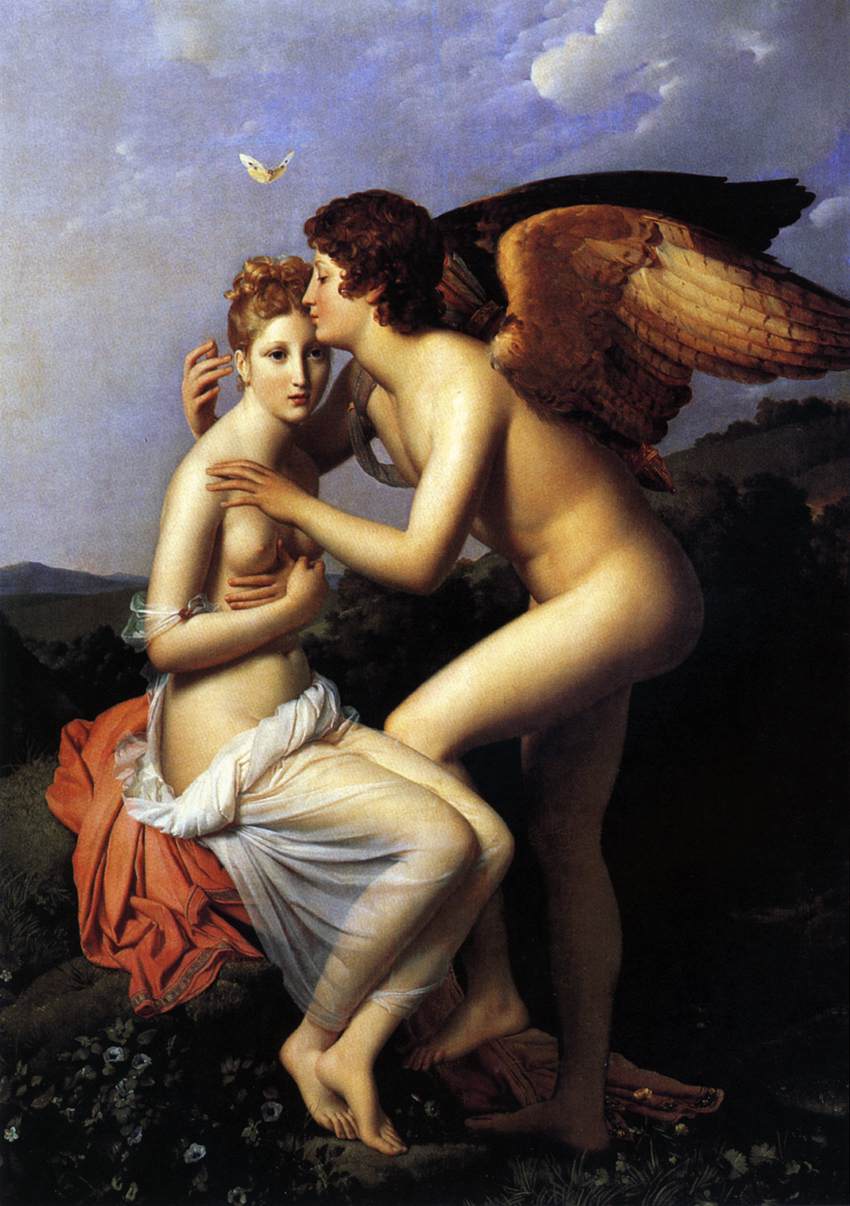
13)Cupid
14)Daedelus
15)Daphne
16)Diana
17)Echo
18)Europa
19)Galantea
20)Hercules
21)Herse
22)Icarus
23)IO
24)Iphis
25)Jason
26)Juno
27)Jupiter
28)Latona
29)Lichas
30)Mars
31) Medea
32)Medusa
33)Mercury
34)Midas
35)Minerva
36)Narcissus
37)Neptune
38)Orpheus 
39)Pan
40)Paris
41)Prosperina
42)Pythagoras
43)Saturn
44)Sybil
45)Tiresias
46)Triton
47)Ulysses
48)Urania
49)Venus
50)Vulcan


Idle Minds and Mythtelling

Sean Kane admits in the introduction to "Wisdom of the Mythtellers" that "I am aware that I am an individual shaped by modernity, an outsider to myth" (p. 15). That is how this class is making me feel.


It is difficult to really grasp myth in the age we're living in, centuries outside the time of oral traditions. Kane condemns literacy as "inactive reading", on the grounds that it is pathetic compared to the mythtelling tradition, where telling involved action, telling is doing something. I just can't bring myself to accept this sort of condemnation. The way that Kane refutes literature echoes my feelings about the media today. Whenever I watch movies, I do so with a sense of guilt (with a few exceptions, of course) because I think: "I should be reading". Mindless movie watching seems so bad for me and my mind because I'm not intellectually challenged the way that I am when I read. Watching movies and TV is isolative and easy and presents me with no intellectual challenge... and I can't imagine somebody truly feeling the same sort of resentment towards reading. If reading is inactive and unengaging (how can reading be unengaging?), then what our we subjecting ourselves to when we put on the television?
Kane explains that storytelling and myth require a kind of performance that engages both the reader and the teller. Reading and writing stories, by contrast, is done on an individual basis. But I, reading alone, still find myself intellectually engaged. I just wonder, if reading and literacy are second to storytelling, what can we call the multimedia entertainment that is taking over? Is it the same, effectively, as reading? We can't possible equate watching a movie with reading a book can we? Just because they are done individually?
We said in class today something that was a little daring, something I never thought about but is an interesting way to look at things: To literalize is to materialize. Like Citizen Kane's house in the movie, which was a literal memory theatre, a collection of all his life's memorobilia. Literature takes something that was oral, and thus invisible, and makes material out of it. We can't deny it. And I think that is something I really dislike about the media and hollywood, it is the culture of a very materialistic society. A very literal society. But I can't say that I dislike literature or its values- I am a literature major for crying out loud! I love literature, and I'm getting worried here that we're putting it in the same category as film, television and technology. Are we?


some of us may connect the term "Myth" with myths of the greek gods- "today they lend their names and aura to makes of cars" (p. 32 Kane). Oh well, at least that's a "starting-point" for an exploration of myth time.

Tuesday, February 3, 2009

autobiographical memories


I found this little briefing on different types of autobiographical memory, i thought it was an interesting way of classifying them. the full article is on this site:


But here's the interesting excerpt:

What’s clear is that we have many reasons for remembering our past.
Sometimes we intentionally reminisce, for example when we want to share old stories with friends and family. The retelling of the past in social settings is an intricate dance taught to children early in life.


Some events are so surprising and important that they become flashbulb memories. For example, many people can remember exactly where they were when they heard the news John F. Kennedy was shot, that man had set foot on the moon, or that airplanes hit the World Trade Center.


On other occasions the memories pop up out of the blue, summoned by something as fleeting as a familiar feeling. “(T)he smell and taste of things remain poised a long time, like souls, ready to remind us,” is how the French novelist Marcel Proust described it.


Studies have also shown that autobiographical memories aren’t necessarily accurate, that they are creative constructions that may change over time to keep up with new circumstances. And that illness or trauma can affect the ability to recall who participated in remembered events, the details of the events, and the life periods in which they occurred.

Monday, February 2, 2009

autobiographical memory

I left Friday's class feeling very satisfied, thinking to myself how content i was to be in this class, and how valuable such a course is. I have been thinking about memory a lot, last semester it was something I would constantly journal about personally. The ways that memory manifests itself in us and functions are mysterious and intriguing. I think a class like Oral Traditions, where we really investigate the mind's capacity for memory, are infinitely interesting because memory is a phenomenon that pervades our entire human existence. So no wonder the same topics keep on coming up again in Dr. Sexson's courses between the years (other topics that came up last semester that I distinctly remembered from my courses with Sexson two years ago included William Blake, "Dead Man", Lycidas, and of course, the ever returning "Idea of Order at Key West"). The mind, our memories, keep taking us back. It is a force beyond our control.


My thoughts were echoed (and better articulated) on page 12 of the book I borrowed "Why life speeds up as you get older":

"Between our first memories and the forgetfullness of old age, between the formation of the memory and the erosion of memories, between the not yet and the no longer being able to remember, lie questions that are bound to arise in each of us simply because we have a memory. It is impossible not to look astonished at something that has been our companion all our life" (Draaisma 12)


That's what makes a course like this, and a book like Draaisma's, so exciting and fascinating. This is the phenomenon of memory. We all have questions and curiosities about how our memories function. Why it is we'll be sitting in the classroom, taking notes on a completely unrelated subject, and suddenly see a visual flash of, say, a narrow street in Murcia, Spain, where we studied the year before. Not a street with any particular significance, like the street you lived on, just a street you would walk down from time to time on your way to a friend's flat or the grocery store. And then the places your mind goes after that unexpected visual, the emotions attached to it, the notion of nostalgia.

A fascinating thing about flash memories is the mood swings they can induce. Apart from feeling a general sense of nostalgia, sometimes, we find ourselves laughing or smiling remembering a happy moment in our lives. Or ackward and embarrassed. Or guilty. Or all of it. Sometimes for no particular reason I see a scene of my spanish life played out again in my head, I feel happy remembering it, and then sad or even devastated, that I only have those moments now as memories; that's its all over. That time in my life has been condemned to the past, to the realm of memory. It's funny because memories should be like gifts, souveniers of the good times to remember how happy we were, but I find they're most always accompanied by a sense of loss, loss for that time in my life. There's something tragic about it. And those moods that memories evoke make the study even more fascinating...

A preview of things to come:
Somebody mentioned the memories of a lakehouse that a smell can evoke in class on Friday, and Sexson promised us that a discussion on the links between the olfactory sense and our memory is yet to come. He then referred to Marcel Proust's "Rememberance of Things Past" (also translated as "In Search of Lost Time")and the madeline scene. It seems no discussion on memory could miss this scene in Proust's book, in which the narrarator tries to recreate memories of his childhood via the smell of the mini sponge cakes (depicted above, called "petite madelines") and the routine of dunking them in a cup of tea, a routine established in his childhood. The book I borrowed from Dr Sexson now, called "Why Life Speeds Up As You Get Older: how memory shpaes our past" references the scene in the chapter on Smell and Memory. And Sexson has referred to it in courses I've had with him before....
I'd like to exercise my own visual memory, as I look at these cakes and recall a scene from 2 years ago, when I was enrolled in Micheal Sexson's "Foundations of Classical Literature course". We were talking about Mnesoyme, the muse of memory, which led to a discussion of classic lit and the power of memory, and I was assigned, with a $20 bill that Sexson gave me, to go out in search of this cookie, "the petite madeline", with no prior knowledge as to the significance of the treat or even what it looked like. Since he directed me to Safeway, I went there first, where I quickly discovered, this is an expensive cookie! They had it on a display of wedding desserts, and there weren't many. i asked the lady if she had more, but all they had was what was on display, so i bought them out, and returned to class, my mission complete, with a bag of packaged petite madelines. WEll, we went to commence the experiment, each student with his or her cookie to unwrap. And as we took the first step in opening them, there was a unified expression of disgust: what we could not see from the outside of the package, was that these madelines were OLD and thus, GREEN. We checked the expiration dates (something I didn't think to do in the store, usually packaged cookies off the shelf aren't in danger of growing mold!) and sure enough, they were a month or two past the expiration date. So our experiment stopped there, and while we weren't able to exercise our memories via the madeline that particular class period, from now on I will always associate any image or mention of that cookie with my mission in classical literature two years ago. The memory lives on.

British Flyting


I wanted to offer up some good English Insults I picked up on a recent trip to London in class on Friday during our discussion of "flyting", but I thought I'd save it for the blog so I could talk to my british boyfriend first and compile a more complete list. Here are a few good ones to start with:

Arsehole: Asshole
Minger: a girl who hideously unattractive
Pillock: another word for idiot (there are many)
Twat/Tosser/Wanker: more vulgar words for asshole or idiot
Muppet: dimwit, nimrod
Nutter: crazy person
Pikey: a low class or gangster type person