One of the many ways that this class has forever changed me will be in my word choice. iIt has been months since I have used the word "literally" when I am speaking. I cannot do it! Every time it springs into my mind, I must replace it with "actually" or another substitute before it leaves my mouth. I guess I have gained a new understanding of "literal" in Oral Traditions, and suddenly statements like "That book was so good, I literally could not put it down" just sound silly to me.
Unless it's on paper, of course.
Saturday, March 7, 2009

March 5, 2009

I was working at the coffee shop thursday morning when a man came in (an eccentric art proffesor of a man) announcing "Boodles blew up". My co worker and I looked at eachother confused. He said "Yea, I just drove by there. Shook my car.There's a big crater where Boodles and the Rockin R Bar used to be". From there on out every person who came in was talking about it: "did you hear there was an explosion downtown?" From the windows of the coffee shop, we could see a huge smoke cloud coming from the downtown area. I had a sinking feeling in my stomach the whole morning, thinking that there was going to be more bad news to come. In an explosion that demolished 8 businesses, surely there would be various casualties. Also, thinking about how this could have just as easily happened 12 hours later- 8:00 at night- when those bars would have been jam packed. That really made me feel sick.
My coworker brought up how this made her think of September 11. Imagine how we are feeling now hearing about an explosion in downtown Bozeman, how many times that would be amplified if we were in downtown New York City when we heard the planes crash. That the twin towers exploded rather than a local bar. I remember where I was when I heard about the crash on the news. Imagine being in the immediate vacinity.
The first day I was in class, we talked about how something that we wanted to work on in this course would be to remember every day like we remember those days when history was altered. I will always remember thursday morning, finding out about that gas explosion while I was working. And an event like that happening sparks the memory to other times when we felt the same sinking feeling of tragedy taking place: September 11th. I think that all of us will remember where we were that day.
Wednesday, February 25, 2009
Breakdown of the Bicameral Mind
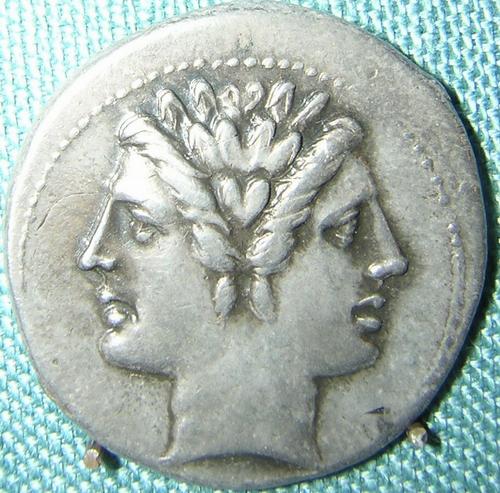
Julian Jaynes asserted in his book "The Origin of Conciousness and the Breakdown of the Bicameral Mind" that we can pinpoint the distancing of human beings from their innate bicamerality to the invention of the alphabet- which happened only once- around 1500 bc. What is bicamerality and what does it have to do with "voices" in the mind? Where did those voices go upon invention of the alphabet?
"Bicamerality may mean simply orality" states Ong at the very end of chapter 2, on page 30. He has not made further reference to bicameralism since then. Jaynes description of ancient bicameral humans makes them sound something like a modern day schizophrenic: hallucinating and hearing voices that they would have to obey. These voices were actually their own internal stream of conciousness, of which they were not aware, heard as the voice of gods or spirits. For example, the nine muses that we have memorized for our class. We understand them to be a symbol or a personification of erotic poetry, history, sacred song, etc. Jaynes believes that ancient people actually heard the muses, passing on their powers of dance, song and poetry.
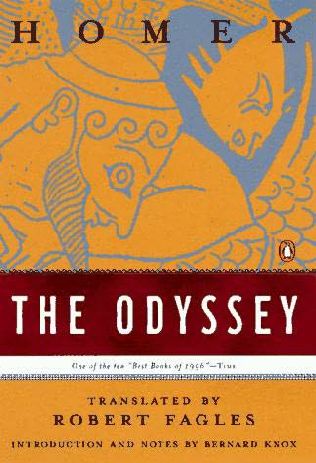
Some evidence of bicamerality and these voicings which Ong talks about in "Orality and Literacy" is found in the Illiad. The Iliad lacks the inner thought processes and introspection that are evident in the Odyssey which was written centuries later. This suggests that in the time period in which the Odyssey was written, human beings had not yet developed accute self awareness.
The breakdown of bicameralism means the aquisition of human self-conciousness and awareness. The Odyssey is evidence that a breakdown occured between its creation and the Iliad because there is an emergence of introspection in the hero and absense of "voices". This mentality seems crazy to us, a literate culture, who puts people that hear voices away in mental hospitals. But we have never had a chance to develope an oral mentality. The mentality we claim, that of literate people, came into existense centuries before we did. We will never experience the bicameral mind. 


Tuesday, February 24, 2009
Speak, Memory
from Nabokov's "Speak, Memory"
I witness with pleasure the supreme achievement of memory, which is the masterly use it makes of innate harmonies when gathering to its fold the suspended and wandering tonalities of the past. I like to imagine, in consummation and resolution of those jangling chords, something as enduring, in retrospect, as the long table that on summer birthdays and namedays used to be laid for afternoon chocolate out of doors, in an alley of birches, limes and maples at its debouchment on the smooth sanded space of the garden proper that separated the park and the house. I see the tablecloth and the faces of seated people sharing in the animation of light and shade beneath a moving, a fabulous foliage, exaggerated, no doubt, by the same faculty of impassioned commemoration, of ceaseless return, that makes me always approach that banquet table from the outside, from the depth of the park —as if the mind, in order to go back thither, had to do so with the silent steps of a prodigal, faint with excitement.
Through a tremulous prism, I distinguish the features of relatives and familiars, mute lips serenely moving in forgotten speech. I see the steam of the chocolate and the plates of blueberry tarts. I note the small helicopter of a revolving samara that gently descends upon the tablecloth, and, lying across the table, an adolescent girl's bare arm indolently extended as far as it will go, with its turquoise-veined underside turned up to the flaky sunlight, the palm open in lazy expectancy of something —perhaps the nutcracker. In the place where my current tutor sits, there is a changeful image, a succession of fade-ins and fade-outs; the pulsation of my thought mingles with that of the leaf shadows and turns Ordo into Max and Max into Lenski and Lenski into the schoolmaster, and the whole array of trembling, transformations is repeated.
And then, suddenly, just when the colors and outlines settle at last to their various duties —smiling, frivolous duties —some knob is touched and a torrent of sounds comes to life: voices speaking all together, a walnut cracked, the click of a nutcracker carelessly passed, thirty human hearts drowning mine with their regular beats; the sough and sigh of a thousand trees, the local concord of loud summer birds, and, beyond the river, behind the rhythmic trees, the confused and enthusiastic hullabaloo of bathing young villagers, like a background of wild applause.
I witness with pleasure the supreme achievement of memory, which is the masterly use it makes of innate harmonies when gathering to its fold the suspended and wandering tonalities of the past. I like to imagine, in consummation and resolution of those jangling chords, something as enduring, in retrospect, as the long table that on summer birthdays and namedays used to be laid for afternoon chocolate out of doors, in an alley of birches, limes and maples at its debouchment on the smooth sanded space of the garden proper that separated the park and the house. I see the tablecloth and the faces of seated people sharing in the animation of light and shade beneath a moving, a fabulous foliage, exaggerated, no doubt, by the same faculty of impassioned commemoration, of ceaseless return, that makes me always approach that banquet table from the outside, from the depth of the park —as if the mind, in order to go back thither, had to do so with the silent steps of a prodigal, faint with excitement.
Through a tremulous prism, I distinguish the features of relatives and familiars, mute lips serenely moving in forgotten speech. I see the steam of the chocolate and the plates of blueberry tarts. I note the small helicopter of a revolving samara that gently descends upon the tablecloth, and, lying across the table, an adolescent girl's bare arm indolently extended as far as it will go, with its turquoise-veined underside turned up to the flaky sunlight, the palm open in lazy expectancy of something —perhaps the nutcracker. In the place where my current tutor sits, there is a changeful image, a succession of fade-ins and fade-outs; the pulsation of my thought mingles with that of the leaf shadows and turns Ordo into Max and Max into Lenski and Lenski into the schoolmaster, and the whole array of trembling, transformations is repeated.
And then, suddenly, just when the colors and outlines settle at last to their various duties —smiling, frivolous duties —some knob is touched and a torrent of sounds comes to life: voices speaking all together, a walnut cracked, the click of a nutcracker carelessly passed, thirty human hearts drowning mine with their regular beats; the sough and sigh of a thousand trees, the local concord of loud summer birds, and, beyond the river, behind the rhythmic trees, the confused and enthusiastic hullabaloo of bathing young villagers, like a background of wild applause.
Monday, February 23, 2009
Synaesthesiacs

I mentioned that in the fall of 2007, I took my first class, American Lit 2, with Dr. Sexson. It was the first class I took within the English department, and probably the one that led me to declare an English Literature major that same semester. I remained relatively disengaged with the material (as I was accustomed to being in class at MSU, having only enrolled in CORE classes up until that point). Until: Lolita. From the first words of the first chapter "Lolita, light of my life, fired of my loins. My sin. My soul", I started engaging. We could probably say that my decision to devote the rest of my education to studying literature was spawned in that moment: before Lolita, I don't remember much about American Lit 2.
As if the sensous writing of Nabokov were a mystery to be solved, I felt like I had cracked the case when Sexson mentioned in class that Vladimir Nabokov was a synesthesiac. When I looked up "synaesthesia" on google later (i believe Sexson told us to look it up on wikipedia with that mention), I had a defining "ah-ha" moment. Of course! It makes so much sense that a person who "suffers" a disorder like this would write as Nabokov does. I felt envy for him, for all synaeshesiacs. Look up the terms of this illness and I think you'll understand what I mean:
http://www.macalester.edu/psychology/whathap/UBNRP/synesthesia/main.html
What I would give to experience the world for a day (no, a week, at least) as Nabokov or other synaesthesiacs do. I would spend the entire week writing I think! Or painting, or widdling, or something! I found an interesting website that states that all art is a manifestation of synaesthesia, a "blurring of the senses". In this way, all art has a "synaesthetic origin". It makes sense to me, check out more about this theory at the following site:
http://www.doctorhugo.org/synaesthesia/art2/index.html
Well, the reason why I am bringing up synesthesia again, 3 years down the line in Oral Traditions, is because this book I borrowed from Dr. Sexson, "Why Life Speeds up As You Get Older" by Douwe Draaisma, mentions a case study of a man with extraordinary memory who was also "synasthetic in the extreme". "The impressions of his various senses ran together" he writes of the man, who was a mathematical genius with almost absolute memory. It brought my mind back to American Lit and I wondered, how do synasthesiacs remember?
As if the sensous writing of Nabokov were a mystery to be solved, I felt like I had cracked the case when Sexson mentioned in class that Vladimir Nabokov was a synesthesiac. When I looked up "synaesthesia" on google later (i believe Sexson told us to look it up on wikipedia with that mention), I had a defining "ah-ha" moment. Of course! It makes so much sense that a person who "suffers" a disorder like this would write as Nabokov does. I felt envy for him, for all synaeshesiacs. Look up the terms of this illness and I think you'll understand what I mean:
http://www.macalester.edu/psychology/whathap/UBNRP/synesthesia/main.html
What I would give to experience the world for a day (no, a week, at least) as Nabokov or other synaesthesiacs do. I would spend the entire week writing I think! Or painting, or widdling, or something! I found an interesting website that states that all art is a manifestation of synaesthesia, a "blurring of the senses". In this way, all art has a "synaesthetic origin". It makes sense to me, check out more about this theory at the following site:
http://www.doctorhugo.org/synaesthesia/art2/index.html
Well, the reason why I am bringing up synesthesia again, 3 years down the line in Oral Traditions, is because this book I borrowed from Dr. Sexson, "Why Life Speeds up As You Get Older" by Douwe Draaisma, mentions a case study of a man with extraordinary memory who was also "synasthetic in the extreme". "The impressions of his various senses ran together" he writes of the man, who was a mathematical genius with almost absolute memory. It brought my mind back to American Lit and I wondered, how do synasthesiacs remember?
In my memory theatre, I have associated the names of the gods with visual pictures of objects in the coffee shop. If I were a synasthesiac, I would have associated the names not only with visual pictures, but also with sounds, smells, or tastes. That would give me a whole extra set of associations. Imagine the capacity for memory, then, that these people have. The man in this book, when trying to recall mathematical calculations from 10 or 15 years earlier, could reproduce the equations in moments because he recalled the "sensory impression of the original test"; the "taste" of the occasion.
Think of how powerful of a memory aid smell is to us. How sometimes a certain smell brings you back to an experience you had at, say, the beach when you were a child. Well, what if you could recall math equations by the stimulus of a smell. Or poetry. These people have 5 different overlapping storage units of memory. I wish I could experience that!
When you think about it, memory happens by sensory associations: by synasthetics. We all have the ability to remember, so we all have something of a synasthetic in us. To be a person who experiences life in a constant state of synasthesia, memory is all the more powerful. For as strong as our memories are, there are humans with almost absolute memories as a result of psychiatric disorders (that makes it sound like a bad thing!). But it's interesting to think that in all human beings there is something of a synasthesiac, in the "blurring of the senses" that memory is.
When you think about it, memory happens by sensory associations: by synasthetics. We all have the ability to remember, so we all have something of a synasthetic in us. To be a person who experiences life in a constant state of synasthesia, memory is all the more powerful. For as strong as our memories are, there are humans with almost absolute memories as a result of psychiatric disorders (that makes it sound like a bad thing!). But it's interesting to think that in all human beings there is something of a synasthesiac, in the "blurring of the senses" that memory is.
My "Testimony" to the Oral Tradition
Yesterday Mr. Sexson came to visit me in my memory theatre- the international coffee traders- the place where I decided to put my 50 characters from Ovid's Metamorpheses because, after four years of working there, I can say I know the nooks and crannies of the place as well as if it were my own house. Well, it was an incidence of synchronization when Mr. Sexson showed up, because I had Ong's "Orality and Literacy" sitting out on the counter intending to read it in the down time at work. i ended up talking about it instead, because the first customer who came in that morning spotted it and started interrogating me about the topic. This is a regular who is a writer stationed in Bozeman writing a book. He told me that if this topic interested me I should look for a book called "The Bicameral Mind" or something to that effect. I told him we just had that a question about the bicameral mind on our test (still, I was provoked to return to that section in Ong for a reread). That was only the first instance, throughout the morning, I'd say about 5 more customers commented on the book. Some asked what it was about, others had something to say on the topic. In any case, I was surprised at people's interest in this topic, and that our Oral Traditions class is not the only demographic that ponders issues concerning orality and literacy. Many people seem to be aware that we're making a shift right now into the digital age that is equivalent to the dawn of literacy and the printing press in human society.
Likewise, it was convenient that syncronicity that Mr. Sexson came by because all this success in memorization (which I testified to today in class) sparked a new question in me that only he could answer (because I don't know anybody else who can quote from such a wide range of classic literature): I see how the memory theatre works for namings off lists of names, spices, top 40 hits, etc. But what about for those long quotations from James Joyce or Nabokov that Sexson has been reciting word for word since my first class with him- American Lit 2- almost 3 years ago ("Lolita. Light of my life, fire of my loins..."). I wondered, is the memory theatre technique his esoteric method for this type of memorization as well. Sometimes these lines from literature plant themselves in our heads simply because they are so beautiful and... unforgettable. I haven't forgotten those few lines from Wallace Stevens "Sunday Morning" that moved me to tears, especially when I walk down feeling "gusty emotions on wet roads on autumn nights. All pleasures and all pains. Remembering the bough of summer and the winter branch. These are the measures destined for her soul". But in every class I've taken, he has always been able to repeat passages from the books we read without referring to the text. How does one do this?
I think of how I went about assigning names to objects in my memory theatre. Originally, my intention was to assign the name to something that would remind me of the story. But I only hold true to that in a few cases... for example putting Jason and Medea together because they share a story in ovid or Achilles and Agamemnon. But those were only vague associations... i know they appear in the story together, but i can't retell the story for you verbateum. It just didn't work out as I was moving along in my memory theatre. But see, I realize now that I could have done that. I could associate names with objects in the coffee shop that remind me of the stories, and use that as means of memorizing the stories of Ovid. So I can see how in this way, literature and stories can be memorized.
The customers who inquired about "Orality and Literacy" ended up getting a testimony similar to the one I gave in class today. I explained how it was a required text for the Oral Traditions course that I am taking right now, which is turning out to be the most fascinating and useful (read: practical) class that I've ever taken because I am discovering a mental capacity that I didn't even know I had, that I wouldn't have known that I have. That is I'm discovering my own capacity for memory, my own divine connection, a place where I find myself "trafficing with the gods".
-"Trafficing with the gods" on Mt Olympus-
Thursday, February 19, 2009
Making my Memory Theatre
 Before and Afterthoughts on the memory theatre: I anticipated that memorizing 50 names without a written list to fall back on or act as a security blanket would be very challenging. I decided to follow the suggestion I read on the wiki article, and first create my memory theatre and walk through it without assigning anything I was memorizing to different places. I ended up choosing the coffee shop that I work at because I have a routine there when I go in to open, and also there are lots of places to put things. I walked through there a few times in my imagination, then let it go for a while. Yesterday, I started assigning names to different points in my memory theatre. Right now I've gotten through the first 30. When I ride up to the coffee shop on my bike, I put my kickstand down with my foot, and that is achilles (achilles-heel, most obvious connection) I pust my bike into the bike rack which is Agamemnon, because Achilles and Agamemnon have a faceoff in Ovid's Metamorpheses. Then I look up at the moon, Apollo. I go to open the door, I see a spider, Arachne. I put my handle on the brass handle to open the door, brass reminds me of Atlantis, Atlanta. Inside the first thing I see is the world map. Atlas. I go over to open the door on the opposite side of the shop and notice the first light of the dawn. That takes care of two- Aurora Boreas (instead of Aurora Borealis). I look at Joe's Parkway market, a seller of fine wine, Bacchus. And on and on like this until I get to Mars (our coffee roaster) which is where I left off. But what was absolutely fascinating to me about this whole process is that I didn't need that written list for a security blanket at all. After the first time I initially put a name in its place, it stayed there in my memory. When I walk through the first thirty names, at no point do I get stuck and I don't leave anything out either. This is really fascinating, its as if a force beyond my control is at work. The best way to describe it is as a phenomenon much like flying through an infinite cavern, to quote St. Augustine.
Subscribe to:
Posts (Atom)